Florida Bat Conservancy
  • Home
  • News
  • Bat Facts
  • Bats of Florida
    • Big brown bat
    • Seminole bat
    • Tricolored bat
    • Gray myotis
    • Northern yellow bat
    • Velvety free-tailed bat >
      • Eastern red bat
    • Brazilian free-tailed bat >
      • Evening bat
    • Florida bonneted bat
    • Hoary bat
    • Southeastern myotis
    • Accidental species
  • Rafinesque's big-eared bat
  • Bat Habitat
  • Bat Houses
  • Bats in Buildings
  • Library
    • Echolocation
    • Excluding bats from buildings >
      • Book
    • Backyard Bat Houses
    • Community Bat Houses >
      • University of Florida
      • Hickory Mound
      • Phipps Water Mgmt. Area
      • Culvert Bat House
      • Tallahassee
      • Florida A&M University
      • Lower Suwannee River
      • Spirit of the Suwannee
    • The University of Florida Bat House
    • Don't plug that hole!
    • Bats found on the ground
  • Links
  • Volunteer
  • Contact Us
  • About Us
  • Bat Rescue
  • Florida Wildlife Commission Regional Offices
  • Bat House Builders
  • Bat Programs

​Community Bat Houses

Picture
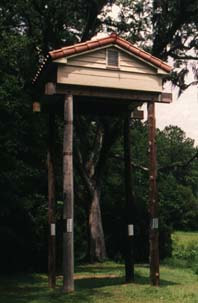
​Community bat houses are large bat houses designed to provide roosting habitat for 5,000 or more bats.  They are referred to as community bat houses because they are often constructed as a community project involving local businesses, volunteers and financial contributors.  But the term “community” might also refer to the fact that a colony of bats can provide additional insect control for the community or that the colony of bats itself is a community of bats.
 
 An indirect benefit of a community bat house is that it indicates the community cares about its native wildlife and is willing to make adjustments for the impact we as humans have on our natural environment.  Educational kiosks and programs at the site can be used to inform the public about bats, insects and environmental conservation. 
  • University of Florida
  • Hickory Mound  
  • Phipps Water Mgmt. Area
  • Culvert Bat House
  • Tallahassee
  • Florida A&M University​​​
  • Lower Suwannee River
  • Spirit of the Suwannee
​The keys to a successful community bat house are design and location.  A well-designed and properly located bat house has a reasonable chance of acquiring bats within a few years.  However, since there are no guarantees, the best we can do is design and locate a bat house in a way that increases the likelihood that the bats will find it, try it out and choose to stay. 
© Copyright 2020 Florida Bat Conservancy
  • Home
  • News
  • Bat Facts
  • Bats of Florida
    • Big brown bat
    • Seminole bat
    • Tricolored bat
    • Gray myotis
    • Northern yellow bat
    • Velvety free-tailed bat >
      • Eastern red bat
    • Brazilian free-tailed bat >
      • Evening bat
    • Florida bonneted bat
    • Hoary bat
    • Southeastern myotis
    • Accidental species
  • Rafinesque's big-eared bat
  • Bat Habitat
  • Bat Houses
  • Bats in Buildings
  • Library
    • Echolocation
    • Excluding bats from buildings >
      • Book
    • Backyard Bat Houses
    • Community Bat Houses >
      • University of Florida
      • Hickory Mound
      • Phipps Water Mgmt. Area
      • Culvert Bat House
      • Tallahassee
      • Florida A&M University
      • Lower Suwannee River
      • Spirit of the Suwannee
    • The University of Florida Bat House
    • Don't plug that hole!
    • Bats found on the ground
  • Links
  • Volunteer
  • Contact Us
  • About Us
  • Bat Rescue
  • Florida Wildlife Commission Regional Offices
  • Bat House Builders
  • Bat Programs