Northern yellow bat
|
Common name: Northern yellow bat
Scientific name: Lasiurus intermedius Family: Vespertilionidae |
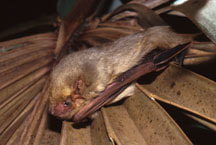
Photo by Jerry L. Gingerich, D.V.M.
|
Description: The northern yellow bat is one of Florida's larger bat species. Its long, thick fur varies in color from yellowish- to grayish-brown. This enables it to be well camouflaged in its preferred roost habitat of dead palm fronds.
Wingspan: 14-16 inches
Body length: 2.8-2.8 inches
Weight: 0.5-1.1 ounces
Florida roosting preferences: Solitary. Roosts primarily in the dead palm fronds of sabal palms, but occasionally roosts in Spanish moss. The practice of trimming dead palm fronds in urban areas destroys habitat for this species.
Food preferences: Insectivorous. Feeds on beetles, flies, damselflies, leafhoppers, flying ants, and other insects. Often seen foraging around streetlights.
Reproduction: Females give birth to one to four pups in late May through June.
Florida status: Common.
Florida range: Found throughout the state, except the Florida Keys.
Copyright Florida Bat Center 2005
Wingspan: 14-16 inches
Body length: 2.8-2.8 inches
Weight: 0.5-1.1 ounces
Florida roosting preferences: Solitary. Roosts primarily in the dead palm fronds of sabal palms, but occasionally roosts in Spanish moss. The practice of trimming dead palm fronds in urban areas destroys habitat for this species.
Food preferences: Insectivorous. Feeds on beetles, flies, damselflies, leafhoppers, flying ants, and other insects. Often seen foraging around streetlights.
Reproduction: Females give birth to one to four pups in late May through June.
Florida status: Common.
Florida range: Found throughout the state, except the Florida Keys.
Copyright Florida Bat Center 2005