Rafinesque's big-eared bat
|
Common name: Rafinesque's big-eared bat
Scientific name: Corynorhinus rafinesquii Family: Vespertilionidae |
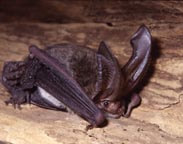
Photo by Barry Mansell
|
Description: Rafinesque's big-eared bat, as you might guess, has very large ears for its size, measuring about an inch in length. It also has two large facial glands on its muzzle and because of this has occasionally been called the eastern lump-nosed bat. Its silky fur is grayish-brown.
Wingspan: 10-12 inches
Body length: 1.5-2.2 inches
Weight: 0.2-0.5 ounces
Florida roosting preferences: Colonial. Usually found roosting in pairs or small groups. Prefers forested areas. Roosts in the hollows and loose bark of dead trees. Also roosts in caves. Occasionally found in abandoned or seldom used buildings in wooded areas.
Food preferences: Insectivorous. Moths make up the majority of the diet for this species, but they also feed on other soft-bodied insects. This is the only bat species in Florida that uses gleaning (picking insects up off of foliage or the ground) as a primary means of foraging, although it captures insects in flight as well.
Reproduction: Females give birth to a single pup in May or early June.
Florida status: Uncommon in the northern portion of the state and rare in the southern portion.
Florida range: Found in scattered locations, mainly in the Florida panhandle and the northern and central portions of the Florida peninsula.
Copyright Florida Bat Conservancy 2005
Wingspan: 10-12 inches
Body length: 1.5-2.2 inches
Weight: 0.2-0.5 ounces
Florida roosting preferences: Colonial. Usually found roosting in pairs or small groups. Prefers forested areas. Roosts in the hollows and loose bark of dead trees. Also roosts in caves. Occasionally found in abandoned or seldom used buildings in wooded areas.
Food preferences: Insectivorous. Moths make up the majority of the diet for this species, but they also feed on other soft-bodied insects. This is the only bat species in Florida that uses gleaning (picking insects up off of foliage or the ground) as a primary means of foraging, although it captures insects in flight as well.
Reproduction: Females give birth to a single pup in May or early June.
Florida status: Uncommon in the northern portion of the state and rare in the southern portion.
Florida range: Found in scattered locations, mainly in the Florida panhandle and the northern and central portions of the Florida peninsula.
Copyright Florida Bat Conservancy 2005