Velvety free-tailed bat
|
Common name: Velvety free-tailed bat
Pallas' mastiff bat Scientific name: Molossus molossus Family: Molossidae |
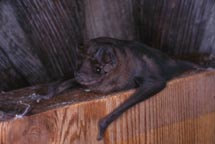
Photo by Jerry L. Gingerich, D.V.M.
|
Description: The short velvety fur varies in color from dark brown to dark gray. Like other bats in the family Molossidae the tail extends well beyond a short tail membrane.
Wingspan: 10-11 inches
Body length: 2.3-2.6 inches
Weight: 0.2-0.5 ounces
Florida roosting preferences: Colonial. So far, in Florida, this bat has only been found roosting in buildings. In Cuba they are known to roost in rock crevices, tree hollows, buildings and the cracks in utility poles.
Food preferences: Insectivorous. They feed on planthoppers, leafhoppers, grasshoppers, moths, beetles, mayflies and other small flying insects.
Reproduction: Females give birth to a single pup, but may have more than one reproductive cycle in a year. Pups are born during the summer from June through September.
Florida status: Uncommon.
Florida range: Found only in the Florida Keys from Key West to Key Largo.
Note: The velvety free-tailed bat was first discovered in the Florida Keys in 1994.
It is believed this species arrived in Florida from Cuba as a result of natural causes. Since then it has expanded its range throughout most of the Florida Keys from Key West to Key Largo.
Copyright Florida Bat Center 2005
Wingspan: 10-11 inches
Body length: 2.3-2.6 inches
Weight: 0.2-0.5 ounces
Florida roosting preferences: Colonial. So far, in Florida, this bat has only been found roosting in buildings. In Cuba they are known to roost in rock crevices, tree hollows, buildings and the cracks in utility poles.
Food preferences: Insectivorous. They feed on planthoppers, leafhoppers, grasshoppers, moths, beetles, mayflies and other small flying insects.
Reproduction: Females give birth to a single pup, but may have more than one reproductive cycle in a year. Pups are born during the summer from June through September.
Florida status: Uncommon.
Florida range: Found only in the Florida Keys from Key West to Key Largo.
Note: The velvety free-tailed bat was first discovered in the Florida Keys in 1994.
It is believed this species arrived in Florida from Cuba as a result of natural causes. Since then it has expanded its range throughout most of the Florida Keys from Key West to Key Largo.
Copyright Florida Bat Center 2005